The Continuity Myth: Why Every Screen Detail Need Not Match
Screen continuity is not about matching every prop or gesture; learn which inconsistencies distract and when a visible change can sharpen a scene.
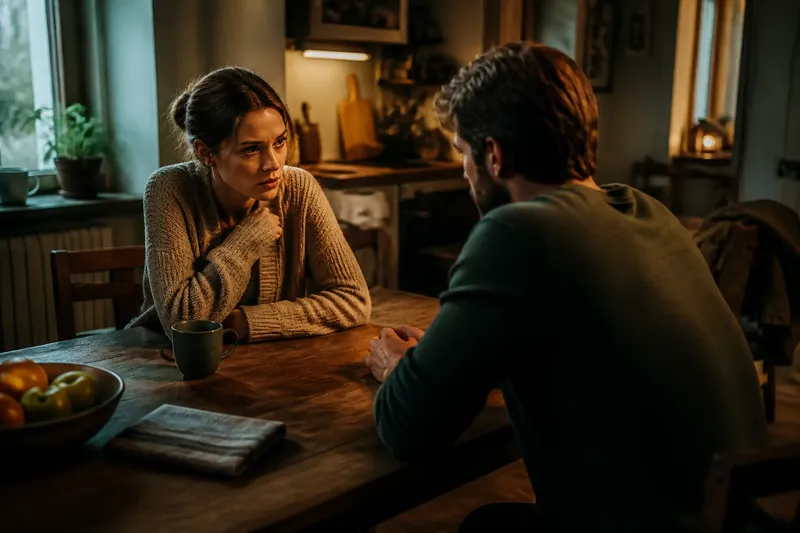
Screen continuity is not the same as making every visible detail match. A coffee cup can move between cuts without damaging a scene; a character’s sudden change of allegiance is harder to ignore. The useful question in editing is not “Does everything line up?” but “Does this difference pull attention away from what the scene means?”
That distinction matters because film is assembled from separate moments. Performance, framing, camera movement and the available coverage all affect what an audience notices. Treat continuity as a tool for directing attention, not a demand to make the image behave like an unbroken record of events.
What does screen continuity actually do?
Continuity helps viewers understand where people and objects are, what has happened, and how one shot relates to the next. A cut from a character looking left to a reverse angle showing the person they face usually feels legible because the viewer can connect the looks. If the next shot instead places that person behind them with no change in the scene, the cut may create a moment of spatial confusion.
But legibility does not require identical images. A closer shot naturally changes what is visible. A character may shift weight or blink between takes. The edit can still feel coherent if the action, emotional direction and geography remain understandable.
It helps to separate continuity into three broad concerns:
- Story continuity: Do actions and information make sense in the order shown?
- Spatial continuity: Can viewers follow the relationships between characters, objects and places?
- Surface continuity: Do small visual details, such as a sleeve fold or glass level, match across shots?
The first two often carry the scene’s meaning. The third can support them, but it is not automatically the priority. A mismatch matters when it draws attention for the wrong reason, obscures an action or suggests a change the story has not made.
Which mismatches pull attention away?
Viewers are especially alert to changes that appear to contradict an action. If a character reaches for a door handle with one hand, then the next angle shows the other hand completing the same reach, the movement may snag the eye. The problem is not simply that the hands differ. It is that the cut asks the viewer to understand one continuous action while presenting two conflicting versions of it.
Other distractions can come from objects that carry meaning. A letter that is open in one shot and sealed in the next may make the audience wonder whether it has been read. A phone that vanishes during a tense exchange can weaken the sense that the character is waiting for a message. These details deserve attention because the scene has made them relevant.
By contrast, an unnoticed shift in a background cushion may not register at all. A detail is not important merely because it changes. Its importance comes from the viewer’s attention, the story’s emphasis and the timing of the cut.
How can an editor judge whether a difference matters?
Start with the cut’s purpose. Is it joining one continuous gesture, moving to a new moment, changing viewpoint or withholding information? A mismatch in a continuous gesture is more likely to jar than the same difference after a pause or a clear change of scene. Context changes what the audience expects.
Then consider the viewer’s likely line of attention. If a close-up holds on a character’s face, the audience may not inspect the exact position of a mug at the edge of frame. If the mug is centred, picked up, set down and left behind, its position becomes part of the action. Framing and performance quietly tell viewers what to track.
Finally, watch the sequence at normal speed. Scrubbing frame by frame is useful for locating a problem, but it can make minor differences feel enormous. In playback, the eye may follow the actor’s expression and never register a background shift. The question is whether the cut disrupts the experience, not whether a still-frame comparison reveals a discrepancy.
Can a visible change help the scene?
Yes, when it communicates something the scene is already preparing. A character can begin composed and end with a loosened tie or a coat dropped over a chair. If the change follows a moment of emotional release, it can make that release visible. The continuity is not “broken” so much as redirected: the audience reads the altered detail as part of the character’s movement through the scene.
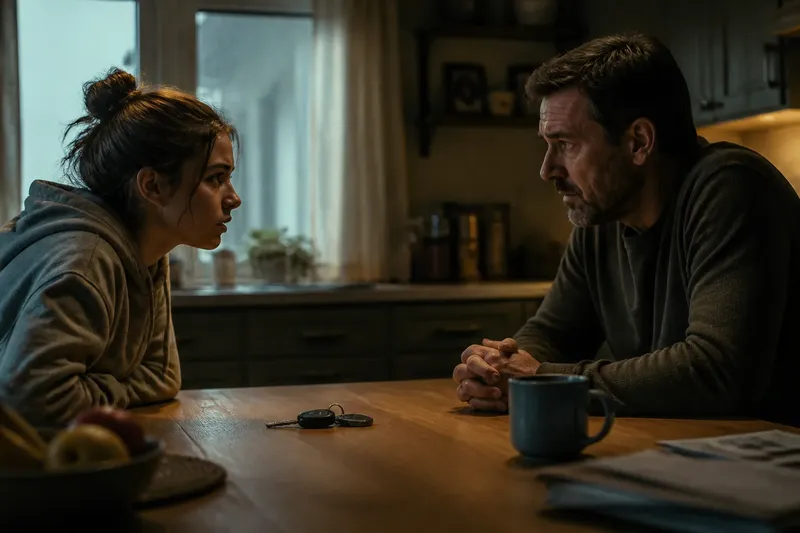
Imagine an invented scene in which Mara enters a kitchen wearing a neatly fastened cardigan and avoids her brother’s gaze. During a difficult conversation, she pulls one sleeve over her hand; the next shot keeps that gesture as she finally looks at him. If the edit preserves the sleeve and the emotional turn, the detail helps the scene feel connected. If the sleeve suddenly returns to its original position before her response, viewers may notice the mismatch because it interrupts a gesture that has acquired meaning.
Deliberate change needs a readable cue. A shift can be carried by performance, blocking, sound, lighting or a clear passage of time. Without such a cue, an audience may read the difference as an accident. With one, the same difference can mark hesitation, fatigue, an interruption or a new phase of the scene.
What should you ask when a continuity issue appears?
Does the mismatch change the meaning of an action?
If the action becomes confusing, the cut may need a different in-point, out-point or shot. If the movement remains clear, the difference may be harmless. Judge the whole gesture rather than treating each frame as a separate test.
Is the detail already carrying story weight?
Objects and costume details draw attention when characters handle them, mention them or react to them. A barely visible change in an unused background prop is less likely to matter than a key the character has just hidden. Keep the edit aligned with what the scene teaches viewers to watch.
Does the change have an emotional or temporal cue?
A shift can feel intentional when the performance or scene structure gives it a reason. A pause, an altered posture or a clear transition may make the change legible. Without that context, the audience may spend its attention solving a visual puzzle instead of following the scene.
Can another cut preserve the moment without drawing attention?
Try a reaction shot, a different take or a cutaway only if it supports the scene’s rhythm and point of view. A patch that calls attention to itself can be worse than a small mismatch. Keep the version that lets the audience stay with the moment.
When should you repair a mismatch?
Repair it when the audience is likely to misread the action, lose track of space or focus on a discrepancy that has no purpose. Before changing the edit, identify the precise distraction. “The scene feels wrong” is a useful first response, but it does not yet tell you whether the issue is an object, a screen direction, a jump in performance or a weak emotional beat.
Then compare the available material. An alternate take may match the action more cleanly; a reaction shot may carry the transition; trimming a few frames may remove the most noticeable hitch. Sometimes the best fix is no fix at all, particularly if the mismatch disappears in context and a repair would flatten the performance.
Be cautious about covering every difference with extra shots. A cutaway can hide a hand movement, but it also changes where the audience looks and how long the moment lasts. If the added image interrupts a pause that matters, the technical repair may damage the scene’s feeling. Continuity decisions belong to the edit’s larger pattern of attention.
How does a deliberate change stay clear?
Make the change perceptible enough to read, but not so emphatic that it feels like a separate announcement. If a character’s composure is slipping, a small shift in posture may be more persuasive than a conspicuous costume alteration. The detail should belong to the same performance and visual world as everything around it.
Also distinguish a designed change from a convenient excuse for inconsistency. A scene does not become expressive just because an edit leaves a prop in a different place. The change needs a relationship to the character, the action or the scene’s passage of time. If you cannot describe that relationship plainly, treat the difference as an unresolved question rather than declaring it intentional.
For a useful review, watch once for story, once for spatial clarity and once for details the scene has taught you to notice. Keep notes about the effect rather than making a catalogue of every mismatch. “The letter seems to close itself before the character reads it” points to a viewer problem; “the paper is two centimetres higher” does not explain why anyone should care.
Screen continuity works best as a quiet agreement between cut and audience: the film gives enough consistency to follow, and enough freedom to make change meaningful. When reviewing screen continuity, protect the actions and details that carry the scene, then let the rest remain human, fluid and alive. The most useful final check is simple: after the cut, are viewers still watching the moment you meant them to see?